
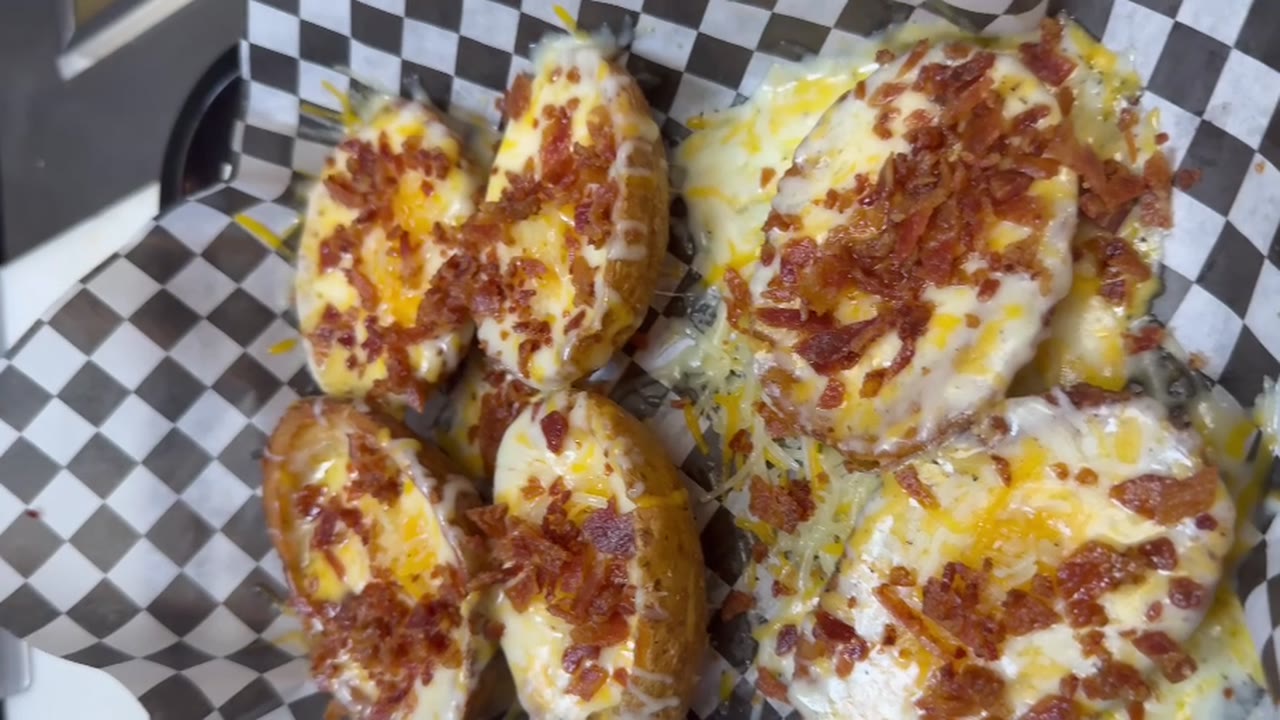
A closer look at Famous Sam’s loaded potato skins: six cheese-and-bacon-topped halves made for a Tucson table, with sour cream or ranch.
Six potato halves, built for the middle of the table
Famous Sam’s River Road serves its potato skins six to an order, with potato halves topped with cheese and bacon. The appeal is structural as much as it is familiar: a sturdy shell, soft potato beneath it, melted cheese across the top and small crisp pieces of smoky bacon.
That contrast makes the order more interesting than a bowl of chips and more practical than a full baked potato. Sour cream or ranch adds a cool, tangy counterweight, so the last bite does not feel as heavy as the first.
A restaurant original with more than one origin story
Loaded potato skins became a recognizable American restaurant appetizer during the 1970s, but no single origin story has been proved beyond dispute. TGI Fridays has long credited an early version to leftover potato shells dressed with seasoning, cheese and bacon. Chicago’s R.J. Grunts and Washington, D.C.’s The Prime Rib have also been connected to early versions.
The disagreement is part of the dish’s charm. Restaurant cooks had found a smart use for the most structurally useful part of a baked potato, and cheese and bacon turned that shell into the sort of hot, communal food that suited casual dining rooms and neighborhood bars.
Why the combination lasts
Potato has a mild, earthy flavor and enough starch to carry richer toppings. Melted cheese supplies salt, fat and a little pull; bacon brings smoke, crispness and concentrated savory flavor. A cool dip cuts through the richness and clears the way for the next bite.
The shell matters as much as the toppings. Leaving enough potato attached gives every piece weight, while the exposed edges keep some bite. A good potato skin should avoid both extremes: not an empty chip and not a baked potato trying to pass as finger food.
Eat them while they still have their edge
Potato skins are at their best when the cheese is warm, the bacon still has some snap and the shell has not had time to soften. This is food worth reaching for right away, not because it needs a dramatic presentation but because the contrast that makes it good is fleeting.
For a lunch break, a game day or a long catch-up with friends, the basket earns its place by giving the table a shared opening note. It is a small ritual, but a useful one: hot food in the center, six chances to claim a favorite piece and no need to overthink the order.
The potato does more than provide a base. Its mild center absorbs a little of the bacon’s salt and the cheese’s richness while the edges preserve their resistance. That shift from crisp shell to soft interior is the reason the basket continues to work after countless restaurant trends have arrived and gone.
A dip should function as a contrast, not a cover. Sour cream brings a clean coolness; ranch brings a little more seasoning. Neither needs to dominate the bite. The better choice depends on the table, which is exactly why both belong alongside an order meant to be passed around.