
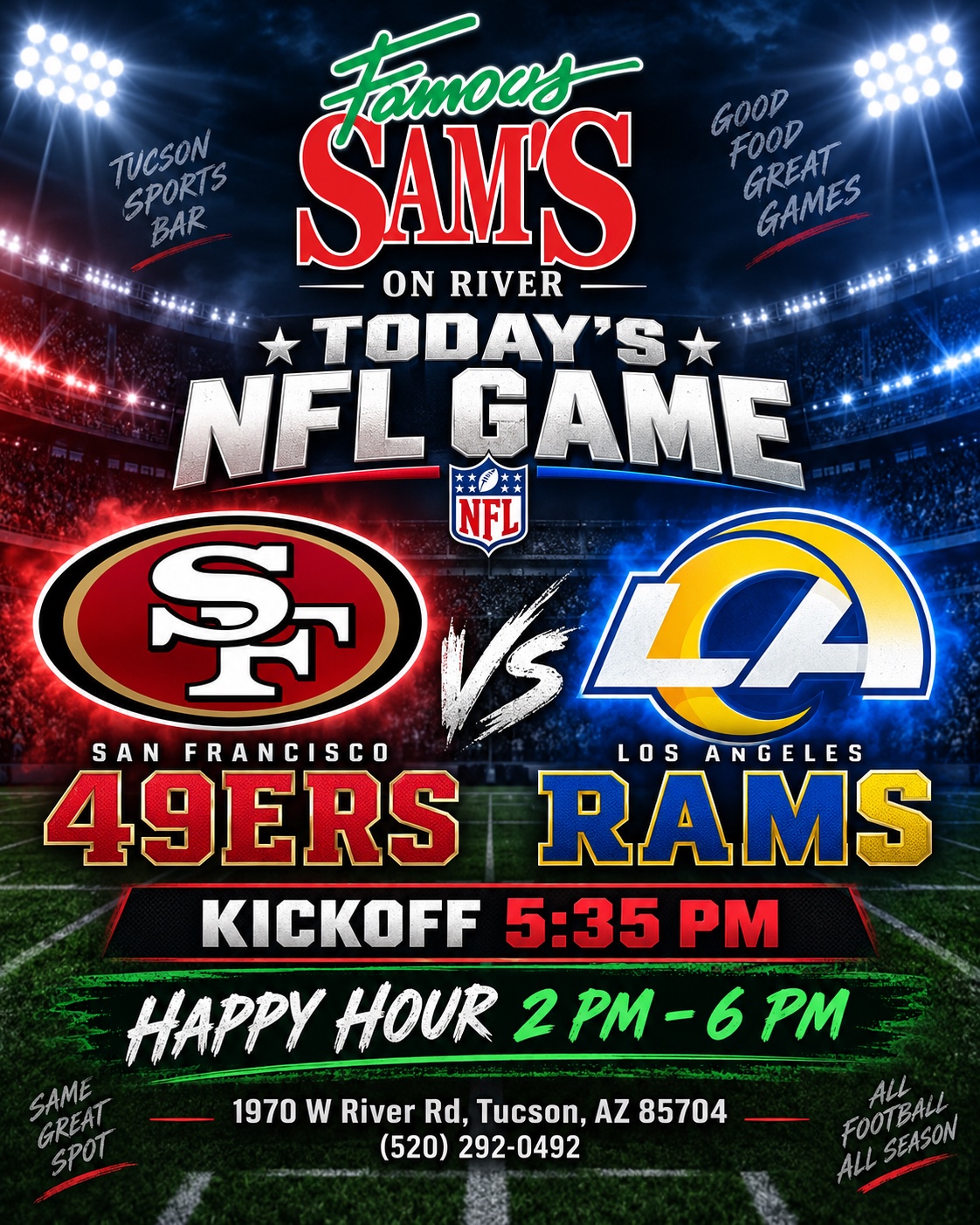
49ers–Rams kicks off at 5:35 PM Tucson time. Explore the latest injury designations, projected starters, tactical matchups and our Rams 27–24 prediction.
A familiar rivalry on unfamiliar ground
The scenery is new. The argument is familiar. San Francisco and Los Angeles can turn an ordinary Thursday into a referendum on protection calls, play-action and which fan base is already booking February. This time, the NFC West rivals take that argument to the Melbourne Cricket Ground for the first regular-season NFL game played in Australia.
Kickoff is Thursday, September 10, 2026, at 5:35 PM Tucson time, equivalent to Friday at 10:35 AM in Melbourne. This is a Week 1 regular-season game. The stakes are an early division win and an immediate test of two talented rosters, not a championship trophy. The injury details below were checked September 10 against team reports. Starting combinations remain projections until game-day decisions and opening formations are known.
49ers injury report: the middle of the defense takes a hit
Alfred Collins is OUT with a knee injury; San Francisco says his torn patellar tendon will end his season. James Thompson Jr. is QUESTIONABLE with a hamstring injury. Nick Bosa and George Kittle have no final game designations, although the team says it will be careful with their workloads. The distinction matters: availability does not establish an unrestricted snap count. Source: the 49ers’ final Week 1 report, linked below.
Reuters reports that C.J. West or Gracen Halton could fill the spot alongside Osa Odighizuwa. San Francisco also lost Sam Okuayinonu to a foot injury. Our analysis: this changes the rotation as much as the opening lineup. Interior defenders absorb repeated contact, and thinner depth can make ordinary early-down runs more consequential in the second half. Watch whether the replacements hold their gaps without pulling Fred Warner away from his coverage responsibilities.
Rams injury report: Donald out; Garrett and Watson worth watching
Aaron Donald is OUT; the Rams list the reason as non-injury-related rest. Myles Garrett, listed with a knee issue, progressed to full participation on the report’s Wednesday column and has no game designation. Jaylen Watson was limited with a toe injury and also has no game designation. Tyler Higbee, Alaric Jackson and Byron Young returned to full participation after rest listings. Source: the Rams’ official injury report, linked below.
Our analysis: Donald’s absence removes one option, but San Francisco still has to solve a front featuring Garrett, Young, Kobie Turner and Braden Fiske. Garrett’s presence can influence the offense even when another defender makes the tackle: extra protection on one side creates a different matchup elsewhere. Watson’s practice status is worth monitoring, but a limited practice alone is not evidence that he will miss the game or play poorly.
Projected San Francisco lineup
Offense, from the team’s unofficial depth chart: QB Brock Purdy; RB Christian McCaffrey; FB Kyle Juszczyk; WR Mike Evans and Deebo Samuel Sr.; TE George Kittle. Offensive line, left to right: Trent Williams, Connor Colby, Jake Brendel, Dominick Puni and Colton McKivitz. Jake Tonges is the next listed tight end. These are first-team listings, not confirmed opening-snap starters.
Defense: Keion White and Nick Bosa on the edges; Osa Odighizuwa inside, with the Collins replacement unresolved. The chart lists Gracen Halton behind Collins; C.J. West is another reported option. Linebackers: Luke Gifford, Fred Warner and Dre Greenlaw. Outside corners: Renardo Green and Deommodore Lenoir; nickel: Upton Stout. Safeties: Ji’Ayir Brown and Malik Mustapha. Kicker: Eddy Piñeiro; punter: Corliss Waitman. Base and nickel personnel are alternatives, not twelve defenders playing together.
Projected Los Angeles lineup
Offense, from the Rams’ unofficial chart: QB Matthew Stafford; RB Kyren Williams; WR Davante Adams and Puka Nacua. Offensive line, left to right: Alaric Jackson, Steve Avila, Coleman Shelton, Kevin Dotson and Warren McClendon Jr. The tight-end listings pair Davis Allen with Tyler Higbee and Colby Parkinson with Terrance Ferguson. The opening package will determine which combination plays. Blake Corum is the second running back.
Defense: Byron Young and Myles Garrett at outside linebacker; Braden Fiske, Poona Ford and Kobie Turner across the interior front, with Donald unavailable. Inside linebackers: Omar Speights and Nate Landman. Corners: Trent McDuffie and Jaylen Watson. Safeties: Quentin Lake and Kam Curl. Kicker: Harrison Mevis; punter: Ethan Evans. These are depth-chart projections subject to availability and personnel packages.
Matchup one: Purdy’s clock against the Rams’ pressure
Our analysis starts with the time between the snap and the decision. San Francisco cannot make every important play depend on Purdy standing still while a long route develops. Quick throws, moving launch points and credible runs can vary the problem for the defense. The ideal sequence makes the Rams hesitate before attacking; the dangerous sequence announces a passing down before the ball is snapped.
Protection help comes at a price. Keep a tight end attached to block, and one potential receiving route disappears. Release everybody, and the quarterback may have to answer pressure immediately. Watch McCaffrey’s alignment and the use of Juszczyk: those choices can reveal whether San Francisco wants another blocker, a fast outlet or a formation that forces the defense to declare its intentions. An ordinary six-yard completion may be the smartest play available.
Matchup two: can Los Angeles make Warner choose?
The Rams’ clearest tactical invitation is to test the reorganized interior with Williams. If San Francisco can control those runs with its front, the linebackers can retain more freedom underneath the receivers. If the run consistently demands an extra defender, Stafford gets a different picture. The important question is not simply whether Los Angeles runs often. It is whether those attempts change what the defense must protect next.
Nacua and Adams give the coverage multiple problems to solve. Our expectation is that formations and motion will matter as much as the individual matchups: a receiver moving before the snap can reveal a coverage responsibility or alter a defender’s leverage. Watch whether San Francisco can pass those assignments cleanly. A communication mistake can produce a more comfortable throw than any physical mismatch, especially early in a season.
Matchup three: where McCaffrey and Kittle change the answer
McCaffrey offers San Francisco a way to make a short play threatening without asking the quarterback to hold the ball. A useful outlet is more than a safety valve: if it repeatedly moves the chains, the defense has to spend attention on it. That can create space elsewhere. The counter is disciplined tackling. A defense that limits yards after the catch can allow underneath completions and still win the possession.
Kittle’s value is the uncertainty he can create between a blocking assignment and a receiving route. But the announced workload caution makes it unwise to build a prediction around a full game of maximum usage. Track what San Francisco asks him to do on its most important downs. Our analysis favors evaluating the quality of those assignments over treating every snap on the sideline as evidence of a setback.
Australia adds a variable, not an automatic advantage
The teams chose different travel strategies. Reuters reports that San Francisco arrived early to acclimate while Los Angeles kept more of its preparation in the United States and planned a later arrival. That is a genuine preparation difference. It is not proof that one team will be exhausted or that the other has earned points before kickoff.
Our view: look for observable consequences instead of narrating jet lag into every mistake. Substitution confusion, slow adjustments and sustained fatigue would be more informative than a single dropped pass. The early possessions also give each sideline information about footing and field conditions. Expect coaches to adjust to what they actually see rather than what the travel debate predicted.
Prediction: Rams 27, 49ers 24
The River Road Review’s editorial prediction is Los Angeles 27, San Francisco 24. This is our football assessment, not a reported result, betting line or model-generated probability. The narrow Rams edge rests on their defensive front and San Francisco’s reduced interior depth. If Los Angeles can create difficult passing downs while staying balanced on offense, it has a plausible route to controlling the final few possessions.
The 49ers’ winning path is equally concrete: McCaffrey keeps drives alive, Purdy protects the ball, and the defense prevents Williams from turning modest gains into a steady procession of first downs. One timely Bosa pressure or a red-zone stop could overturn the entire prediction. We expect a competitive game because neither offense has to rely on one answer, and neither defense can comfortably ignore the opponent’s best playmakers.
The viewer’s scorecard: five details that explain the night
First, early-down success: does the offense earn choices on second down? Second, third-down distance: converting third-and-three is a different task from surviving third-and-nine. Third, pressure without a blitz: if four defenders hurry the quarterback, the remaining coverage has more help. Fourth, red-zone finishing: field goals can disguise an offense’s failure to capitalize. Fifth, short fields after turnovers: the location of a mistake can matter as much as the total number.
For lineup and fantasy decisions, check the final inactive announcements before kickoff; the 49ers say those decisions are announced 90 minutes before the game. Do not confuse a projected starter with a guaranteed workload. The same caution applies to the prediction: a late personnel change can alter the protection plan, rotation or scoring outlook.
Watch in Tucson: make it a River Road football night
You do not need a flight to Australia to enjoy this rivalry with a room full of opinions. Famous Sam’s on River has tonight’s 49ers–Rams matchup on the game-day calendar, with kickoff at 5:35 PM Tucson time and Happy Hour from 2–6 PM. Arrive before kickoff, settle the friendly rivalry early and bring the friend who insists every incomplete pass was actually a brilliant coaching decision.
Find us at 1970 W. River Road, Tucson, AZ 85704. Call (520) 292-0492 for seating questions, and use the official restaurant website for current menu information. Read the personnel report, make your prediction and let the scoreboard do the arguing.
Read the three-minute recap transcript
You’re listening to the River Road Sports Recap from Famous Sam’s on River in Tucson. Here is your three-minute preview of the San Francisco forty niners against the Los Angeles Rams.
Kickoff is Thursday, September tenth, at five thirty-five in the evening, Tucson time. The game is at the Melbourne Cricket Ground. It is the first regular-season NFL game in Australia, and an early division test with real consequences for the NFC West.
Start with the injuries. San Francisco defensive lineman Alfred Collins is out after a season-ending knee injury. James Thompson Junior is questionable with a hamstring problem. That puts extra attention on the interior defensive rotation and the ability to stop Kyren Williams before he reaches the linebackers.
Nick Bosa and George Kittle have no final game designations. That is encouraging, but it does not promise unlimited snaps. The forty niners have said they will manage both players’ workloads. Watch how often Bosa is available on passing downs and whether Kittle can contribute as both a receiver and a blocker.
For the Rams, Aaron Donald is out. Myles Garrett finished the listed Wednesday practice as a full participant and has no game designation. Cornerback Jaylen Watson was limited with a toe issue, also without a game designation. Final inactive lists still matter.
The projected quarterbacks are Brock Purdy and Matthew Stafford. San Francisco’s depth chart features Christian McCaffrey, Mike Evans, Deebo Samuel and Kittle. Los Angeles counters with Kyren Williams, Puka Nacua and Davante Adams. These are depth-chart projections, not a confirmed opening formation.
Our biggest matchup is Purdy against the Rams’ pressure. San Francisco needs quick completions, useful first-down runs and protection help that does not erase its receiving options. A checkdown that keeps the drive alive can be more valuable than forcing a spectacular throw.
At the other end, Stafford can make the forty niners defend the entire field. The Rams should test the weakened interior with Williams, then ask San Francisco to handle Nacua and Adams without sacrificing its run support. If the forty niners stop the run without extra help, their coverage choices become much easier.
Our editorial prediction is Rams twenty-seven, forty niners twenty-four. We give Los Angeles a narrow edge because of its defensive front and San Francisco’s interior injuries. The upset path is clear: McCaffrey sustains drives, Purdy avoids short-field turnovers, and Bosa creates one decisive pressure late.
Watch first-down efficiency, third-down distance and touchdowns inside the twenty. Those details will explain the scoreboard. Read the full preview, projected lineups and source links in the River Road Review. That is your football briefing from Famous Sam’s on River.